Writing a book is hard. Publishing one is often harder. Once the manuscript is finished, authors suddenly need to think about formatting, cover design, distribution, and marketing, usually all at once. That is exactly the gap sparkpressfusion com is trying to fill.
If you searched this exact phrase, you are probably trying to answer a simple question: is this platform actually worth an independent author’s time? This article walks through what it offers, who it fits best, and where it may still fall short, without repeating the vague summaries already floating around the web.
What Is Sparkpressfusion Com?
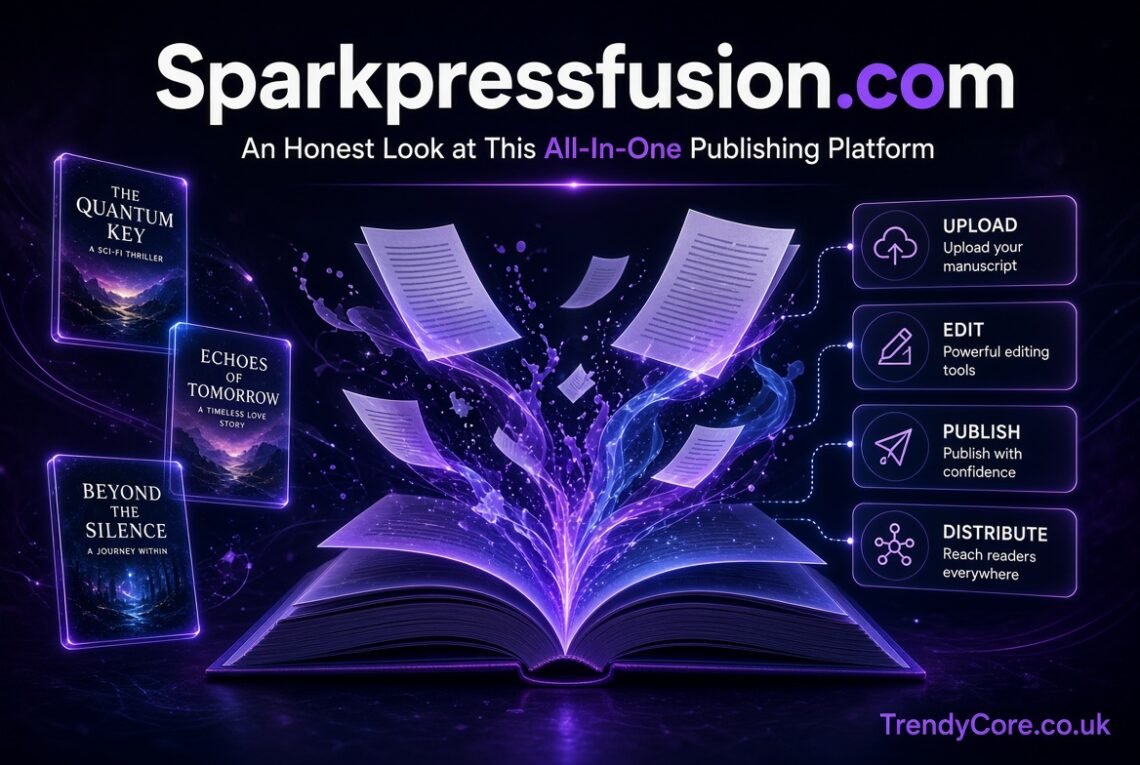
At its core, sparkpressfusion com positions itself as an all-in-one workspace for self-published authors. Instead of jumping between separate apps for editing, formatting, cover design, and promotion, the platform tries to bring those pieces together under one dashboard.
That idea is not new. Plenty of tools promise to simplify publishing. What makes this one worth examining is the specific combination of features it claims to offer: formatting support, customizable templates, built-in promotional tools, and options for both print and digital output. For a first-time author staring down a long checklist after finishing a manuscript, that kind of consolidation sounds appealing on paper.
Why Centralized Publishing Tools Matter
Before digging into features, it helps to understand why platforms like this exist in the first place. Traditional self-publishing usually means juggling a formatting tool, a separate design app for the cover, a distribution account, and a completely different set of tools for marketing. Each step has its own learning curve, and switching between them eats up time that could go toward actual writing.
A centralized approach tries to remove that friction. Instead of five logins and five workflows, an author works from a single place. That does not automatically make the finished book better, but it does reduce the number of decisions and technical hurdles standing between a manuscript and a published product.
Core Features Worth Knowing About
Formatting and Layout Tools
One of the most repetitive parts of self-publishing is formatting a manuscript so it looks right in both print and digital formats. Sparkpressfusion com reportedly handles this through built-in formatting tools, cutting down on the manual adjustments authors usually have to make when preparing a file for platforms like Kindle or print-on-demand services.
Customizable Cover Templates
A strong cover still sells books, especially in crowded genres. The platform offers customizable templates, which gives authors without design experience a starting point instead of a blank canvas. This matters more than it sounds, since a weak cover can hurt a good book before a reader even opens the first page.
Print and Digital Publishing Support
Flexibility across formats is another selling point. Authors increasingly want their work available in more than one format, whether that is a paperback, an ebook, or both. Supporting print and digital output from the same workspace saves authors from re-formatting a manuscript twice for two completely different systems.
Built-In Marketing and Promotional Tools
Writing a great book does not guarantee readers will find it. Marketing is often the part authors struggle with most, since it requires a different skill set entirely. The promotional features built into sparkpressfusion com aim to close that gap, giving authors some built-in options for reaching an audience instead of starting from zero.
Project Organization and Tracking
Beyond the creative side, the platform also appears to help with basic project management, letting authors track progress and manage multiple publishing tasks in one view. For anyone juggling more than one project at a time, that kind of organization can prevent things from slipping through the cracks.
The Broader Shift Toward All-In-One Author Tools
It helps to zoom out for a moment and look at why platforms like this keep appearing. Over the past decade, self-publishing has grown from a niche option into a mainstream path for authors. More writers than ever are skipping the traditional query-and-wait process and taking their books directly to readers.
That growth created a new problem. As more tools entered the market to handle formatting, design, distribution, and promotion, authors ended up managing an overwhelming stack of separate accounts and subscriptions. Consolidation was the natural next step. Instead of ten specialized tools, the market started producing platforms that try to do most of the job in one place.
This context matters because it explains why a platform built around simplicity resonates with so many independent writers right now. It is not solving a hypothetical problem. It is responding to a real, well-documented pain point that almost every self-published author eventually runs into.
How It Compares to Other Publishing Approaches
Here is a simple side-by-side look at how a centralized platform like this differs from the traditional multi-tool approach most independent authors are used to.
| Aspect | This Platform’s Approach | Traditional Multi-Tool Approach |
|---|---|---|
| Workflow | Single dashboard for most tasks | Separate apps for each task |
| Learning Curve | Lower, beginner-friendly design | Higher, requires learning multiple tools |
| Formatting | Built-in formatting support | Manual formatting or third-party software |
| Marketing | Included promotional features | Separate marketing tools or services |
| Best For | Authors who want simplicity | Authors who want full control over each step |
Neither approach is objectively better. It comes down to whether an author values simplicity or prefers full control over every individual piece of the process.
Who This Platform Is Really Built For
Not every writer needs the same kind of support. Based on how the platform is described, it seems best suited for a few specific groups.
- First-time authors who feel overwhelmed by the technical side of publishing.
- Independent writers juggling multiple projects who want everything in one place.
- Authors with limited design experience who need a starting template rather than a blank page.
- Busy creators who want built-in marketing tools instead of hiring separate help.
Authors who already have an established workflow, a designer they trust, and a marketing plan in place may find less value here, since they are already solving the exact problems this platform is built to address.
Strengths and Weaknesses
No platform is a perfect fit for everyone, so it helps to weigh both sides honestly.
What stands out:
- A genuinely simplified workflow that reduces the number of tools an author needs to juggle.
- Beginner-friendly design that does not assume prior publishing experience.
- Support for both print and digital formats from a single project.
- Built-in promotional features that give first-time authors a starting point for marketing.
Where it may fall short:
- Authors who want granular control over design and formatting may find the templates limiting.
- As a newer name in the space, it does not yet have the long track record of more established publishing services.
- Built-in marketing tools, while helpful, likely cannot fully replace a dedicated marketing strategy or professional publicist.
These trade-offs are common with most all-in-one tools. Convenience usually comes with some reduction in flexibility, and that pattern applies here as well.
Is It a Replacement for Traditional Publishing?
This is worth addressing directly, since it is one of the most common points of confusion. Sparkpressfusion com is not a traditional publishing house, and it does not appear to offer the same editorial vetting or advance-based deals that come with signing with an established press. It fits more comfortably into the self-publishing and hybrid publishing space, where authors retain more control but also take on more of the responsibility themselves.
For writers who want an agent, a traditional book deal, and a publisher’s marketing machine behind them, this type of platform is not the right comparison. For those choosing the independent route and looking for a way to make that path less chaotic, it becomes a much more relevant option.
Tips for Getting the Most Out of It
If you decide to try the platform, a few habits can improve the experience. Start with a clear outline of your publishing goals before diving into the dashboard, since knowing whether you want print, digital, or both will shape how you use the formatting tools. Take advantage of the templates as a starting point, then customize enough that your cover still feels unique rather than generic. Finally, treat the built-in marketing tools as a foundation, not a complete strategy. Pairing them with your own outreach, whether that is social media, an email list, or reader communities, will likely produce better results than relying on the platform alone.
What to Check Before You Commit
Before signing up for any publishing platform, it pays to slow down and check a few basics first. Look closely at what happens to your rights and royalties once your book is published through the system, since this varies widely across the self-publishing landscape. Read through the formatting output carefully rather than assuming the templates will work perfectly for your specific genre or trim size. Test the promotional tools on a small scale before relying on them as your entire marketing plan, since built-in features often work best as a supplement rather than a full strategy.
It is also worth reaching out to current users if possible, whether through writing communities, forums, or social media groups. First-hand accounts tend to reveal practical details that a features list on a website will not mention, such as how responsive customer support actually is or how steep the learning curve feels once you get past the first project.
Taking these extra steps does not cost much time, but it can save a lot of frustration later, especially if you plan to publish more than one title through the same workflow.
Frequently Asked Questions
Is sparkpressfusion com a good option for first-time authors? It appears to be, largely because of its beginner-friendly design and the way it consolidates formatting, design, and marketing into one workflow.
Does it support both ebooks and print books? Yes, based on available information, the platform supports both digital and print formats from within the same project.
Will it completely replace the need for a marketing plan? Not entirely. The built-in promotional tools help, but most authors will still benefit from combining them with their own outreach efforts.
Is this the same as traditional publishing? No. It falls into the self-publishing and hybrid publishing category rather than the traditional acquisition-based model.
Who benefits the least from this type of platform? Authors who already have an established design, formatting, and marketing workflow may not gain much extra value from switching over.
Final Thoughts
Self-publishing does not have to mean juggling five different tools and learning five different systems. That is the core problem sparkpressfusion com is trying to solve, and based on what it offers, it does a reasonable job of bringing formatting, design, and marketing under one roof.
It will not replace a dedicated design team or a full marketing agency, and it is not a substitute for traditional publishing. But for independent authors who want a simpler, more organized way to bring a manuscript to readers, it is a platform worth exploring further before committing to a scattered, multi-tool approach.
If you are on the fence, the best next step is simple: try it with a small project first, see how the workflow feels in practice, and decide from there whether it earns a permanent spot in your publishing process.
You may also Like: Fentomagazine.com USA





One comment on “Sparkpressfusion Com: An Honest Look at This All-In-One Publishing Platform”