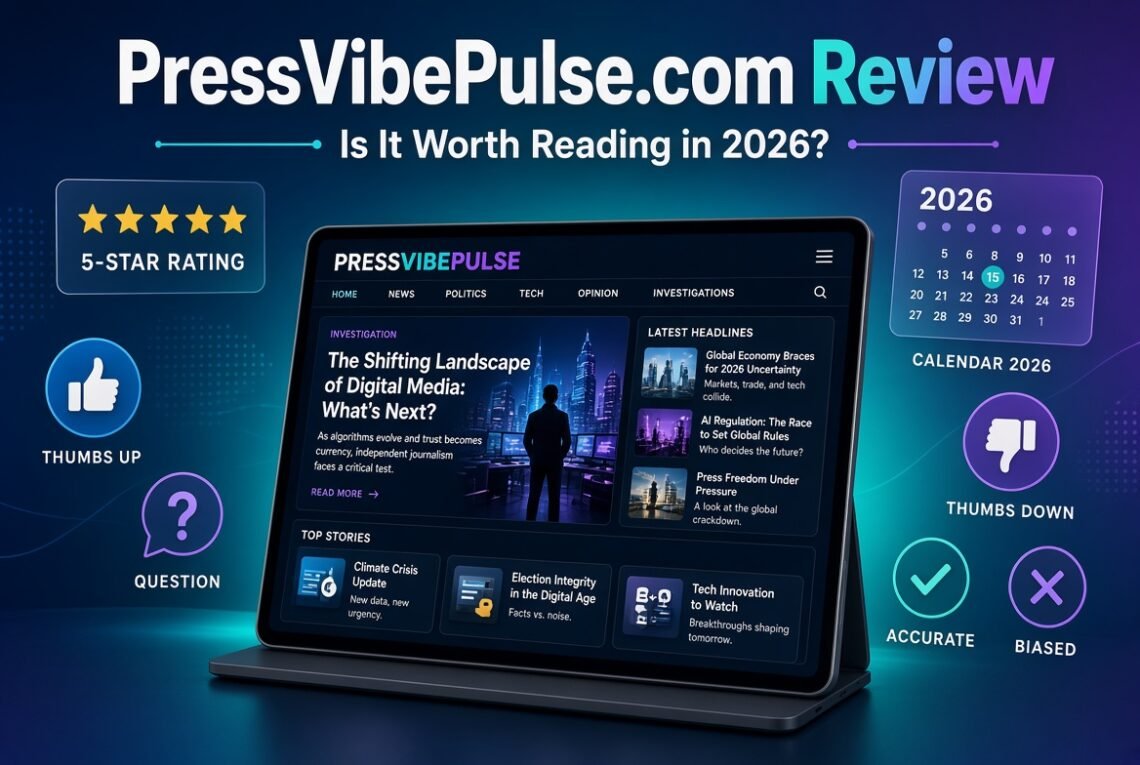
The internet is drowning in content. Every day, thousands of new articles fight for a handful of minutes on your phone screen. Somewhere in that noise sits pressvibepulse com, a multi-category site that promises fast, easy reads on everything from tech to travel. But does it actually deliver, or is it just another forgettable stop in your browser history?
This guide breaks down what pressvibepulse com actually offers, who it’s built for, and whether it deserves a spot in your daily reading rotation. No fluff, no recycled talking points just a straight look at what you’ll find when you click through.
What Is Pressvibepulse Com?
At its core, pressvibepulse com is a general-interest digital magazine. It doesn’t chase one niche the way a dedicated finance blog or a single-topic tech outlet would. Instead, it spreads across several categories at once, giving readers a buffet-style selection rather than a deep dive into one subject.
The layout feels familiar if you’ve spent any time on online magazines. A top navigation bar sorts content into sections, the homepage mixes featured stories with recent posts, and each article card gives you a headline, a short teaser, and sometimes a byline. It’s a format designed for skimming, not studying.
Categories typically include:
- Technology and digital trends
- Business and entrepreneurship
- Lifestyle and wellness
- Travel
- Health
- Fashion
- Finance
That spread is both the site’s biggest strength and its most obvious limitation, which we’ll get into shortly.
Why People Are Talking About It
Search interest around the site has picked up recently, and that’s usually a sign of one of two things: either a site is growing fast and gaining a genuine audience, or people are searching to figure out if it’s trustworthy before they commit any time to it. In this case, it looks like a mix of both.
Readers land on the site through search results or social shares, skim a short article, and then wonder who’s actually behind the content and how reliable it is. That curiosity is fair. Not every fast-reading website invests the same effort in fact-checking, sourcing, or editorial oversight, and it’s smart to ask questions before treating any single article as gospel.
Content Style and Readability
One thing stands out immediately when you browse the site: the articles are short. Most posts fall somewhere between 400 and 800 words, which means a full read rarely takes more than five minutes. For readers who want quick context rather than an academic deep dive, that’s a real advantage.
The writing style leans conversational. Sentences are short. Paragraphs are broken up often, which makes scrolling on mobile painless. There’s less jargon than you’d find on a specialist publication, which helps casual readers but can frustrate anyone looking for technical depth.
Here’s how that plays out across the site’s main categories:
| Category | Typical Depth | Best For |
|---|---|---|
| Technology | Surface-level explainers | Quick trend awareness |
| Business | General tips, light analysis | Entrepreneurs skimming ideas |
| Health | Basic overviews | Casual reading, not medical decisions |
| Travel | Destination highlights | Trip inspiration |
| Finance | Simplified guides | Beginners, not detailed planning |
The pattern is consistent: broad reach, moderate depth. That’s a deliberate trade-off, and it shapes who should and shouldn’t rely on the site heavily.
Behind the Scenes: How the Site Is Structured
A closer look at the backend structure explains a lot about the reading experience. The homepage typically leads with a handful of featured or trending posts, followed by a chronological feed of recent articles. Each entry usually includes a category tag, a headline, a byline, a publish date, and sometimes a comment count.
Category pages group content by topic, which makes it easy to jump straight into travel guides or tech explainers without scrolling past everything else. Pagination handles older posts, and a built-in search bar lets returning readers find specific articles instead of hunting through archives manually.
This structure isn’t unique it’s the same skeleton most digital magazines use. But it works because it’s predictable. Readers know where to look, and that familiarity reduces friction. You don’t need a tutorial to figure out how to browse the site; you just click a category and start reading.
The Business Model Behind Free Content
Nothing on the platform sits behind a paywall, and that raises a fair question: how does a free content site sustain itself? The answer, in almost every case like this, comes down to advertising and traffic-driven revenue.
Display ads fund the operation, and article volume matters more than any single piece going viral. That explains the publishing cadence regular, moderate-length posts across many categories, aimed at capturing search traffic from a wide range of everyday queries. It’s a volume game, not a prestige game.
This model isn’t inherently bad. Plenty of useful resources run on ad revenue. But it does shape incentives. Sites built around search traffic tend to prioritize topics people are actively searching for over topics that need to be covered regardless of demand. Keep that in mind when you notice certain subjects covered repeatedly while others barely get mentioned.
Is Pressvibepulse Com Reliable?
This is the question most people actually want answered, and the honest response is: it depends on what you’re reading it for.
For casual browsing catching up on a trending topic, getting a rough idea of a travel destination, or skimming a lifestyle tip the site does its job well. Pages load quickly, the design stays clean, and nothing about routine browsing raises red flags.
Where things get trickier is with higher-stakes topics. Health, finance, and legal subjects deserve sourcing, expert review, and clear author credentials. General-interest sites covering a wide spread of categories don’t always match the specialist rigor you’d get from a dedicated medical journal or a licensed financial advisor’s blog. That’s not necessarily a criticism unique to this platform it’s true of most broad-topic content hubs. The takeaway is simple: treat pressvibepulse com as a starting point for awareness, not a final source for decisions that matter.
Pros and Cons
No review is complete without weighing the upsides against the drawbacks. Here’s a balanced breakdown.
Pros:
- Fast loading speeds and a clean, uncluttered layout
- Short articles that respect readers’ time
- Wide category coverage in one place
- Mobile-friendly design
- No paywall blocking access to content
Cons:
- Limited depth on complex or technical subjects
- Sourcing and author credentials aren’t always clear
- Not a substitute for expert-reviewed advice on health or finance
- Content can feel generic compared to niche specialist blogs
Weighing these side by side, the site earns its place as a convenience read rather than an authority. That’s an important distinction for anyone deciding how much trust to place in a single article.
Who Should Actually Use Pressvibepulse Com?
Not every website fits every reader, and that’s true here too. This platform makes the most sense for:
Casual readers who want a quick pulse-check on trends without committing to a long article. If you’re curious about what’s happening in tech or entertainment but don’t need a research paper, this fits the bill.
Mobile browsers who scroll during short breaks. The layout and article length are built for exactly that kind of reading pattern.
People exploring new topics for the first time. Short, plain-language overviews can be a solid entry point before you dig into more specialized sources.
On the flip side, if you need in-depth financial planning advice, a medical diagnosis, or investigative journalism, you’ll want to look elsewhere or at least cross-check anything you read here.
How It Compares to Similar Platforms
Multi-category digital magazines aren’t a new idea. Sites like this compete with countless other general-interest hubs, and the difference often comes down to execution rather than concept.
What tends to separate a decent version of this format from a forgettable one includes:
- Update frequency: does new content appear regularly, or does the site go stale?
- Load speed: a slow site kills the “quick read” value proposition instantly.
- Design clarity: clutter and aggressive ads push readers away fast.
- Voice consistency: does the writing feel human and consistent, or does it read like a template stretched across every category?
On these fronts, the platform performs reasonably well on speed and design. Voice consistency and depth are where it shows the natural limits of covering so many topics at once.
Tips for Getting the Most Out of the Site
If you decide to add this site to your reading habits, a few practices will help you get more value out of it:
- Use it for quick trend-spotting, not final decision-making.
- Cross-reference anything health- or finance-related with a specialist source before acting on it.
- Bookmark categories that match your interests rather than browsing everything at once.
- Treat short articles as a jumping-off point for deeper research when a topic really matters to you.
Used this way, the platform becomes a useful filter for figuring out what’s worth your deeper attention, rather than a replacement for it.
Common Questions Readers Ask
A few questions come up again and again when people first discover this kind of site. Here are straightforward answers.
Is it free to read? Yes. There’s no subscription wall, no login requirement, and no metered paywall blocking articles after a certain number of views.
Is it updated often? Generally, yes. New posts appear on a regular schedule, which keeps the homepage feeling current rather than stale.
Does it work well on mobile? The layout responds well to smaller screens, with readable text sizes and a navigation menu that collapses cleanly rather than cluttering the page.
Should I trust every article at face value? Not without a second look, especially for anything touching health, finance, or legal matters. Treat those articles as a starting point and verify important details with a specialist source before acting on them.
How does it compare to a dedicated niche blog? A specialist blog will almost always go deeper on its one subject. What this platform offers instead is breadth one stop for several topics rather than expert-level detail on a single one.
Final Verdict
This platform fills a specific niche: fast, digestible content across a wide range of everyday topics. It won’t replace specialist publications, and it isn’t trying to. What it offers instead is convenience a place to catch up on trends without wading through long-form articles.
For casual reading, trend awareness, and light inspiration, it does a solid job. For decisions that carry real consequences your health, your money, your safety treat it as a starting point, not a final word. Approached with that mindset, pressvibepulse com can be a handy addition to your reading list rather than a source of frustration.
If you’re curious, the best move is simple: browse a few categories yourself, see if the tone and pace match what you’re looking for, and decide from there whether it earns a permanent spot in your bookmarks.
Digital magazines like this one aren’t going away. As attention spans shrink and readers look for faster ways to stay informed, short-form, multi-category platforms will keep finding an audience. The ones that last are the ones that stay consistent regular updates, a clean experience, and content that respects the reader’s time without pretending to be something it isn’t. Judged by that standard, this is a reasonably solid entry in a crowded field, provided you keep its limitations in mind and reach for a specialist source whenever a topic really matters.
You may also Like: Sparkpressfusion Com




One comment on “PressVibePulse com Review: Is It Worth Reading in 2026?”