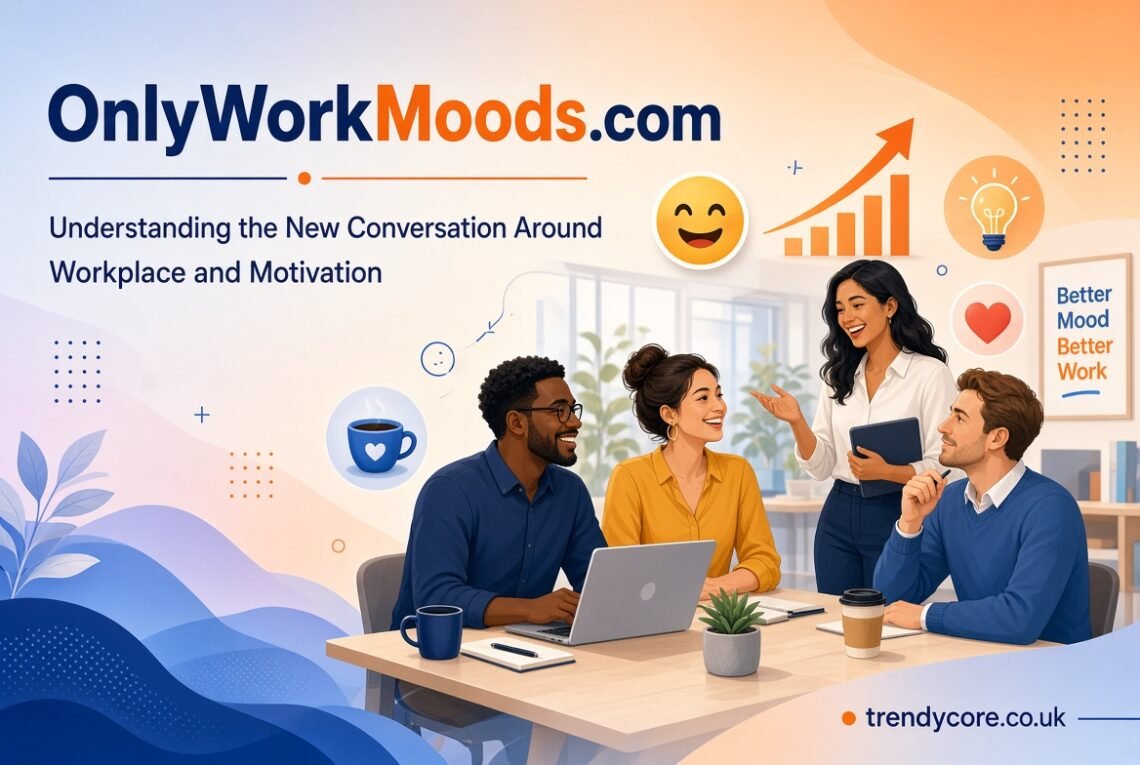
Work doesn’t feel the same as it did ten years ago. Offices are quieter, screens are louder, and the line between “at work” and “off work” has almost disappeared. In the middle of this shift, a new phrase has started popping up in online conversations: OnlyWorkMoods.com.
It isn’t a household name yet. But the idea behind it touches something almost every working person has felt the sense that your mood, more than your skill set, decides how your day actually goes. This article breaks down what that idea means, why it matters, and how you can use it to build healthier, more productive work habits.
What Is OnlyWorkMoods.com Really About?
At its core, OnlyWorkMoods.com represents a growing interest in workplace mood, emotional energy, and motivation cycles. It isn’t just another productivity buzzword. It’s a lens for looking at work differently one that puts feelings, not just to-do lists, at the center of performance.
Traditional productivity advice tends to focus on tools: calendars, task managers, time-blocking apps. Useful, sure. But they all assume you’re starting from the same emotional baseline every day. Anyone who has dragged themselves through a Monday morning meeting knows that isn’t true.
The concept behind OnlyWorkMoods.com fills that gap. It asks a simple but overlooked question: how do you actually feel while you work, and how does that feeling shape what you get done?
Why Workplace Mood Suddenly Matters So Much
A few years ago, “mood” wasn’t really part of the workplace vocabulary. Now it’s everywhere in HR strategy decks, in wellness apps, in casual Slack check-ins. A few forces pushed it there.
Remote and Hybrid Work Blurred the Boundaries
When your kitchen table doubles as your desk, work stress doesn’t stay contained to office hours. Emotional spillover between home and work life is far more common in remote setups, and that spillover directly affects focus and output. This is part of why platforms and ideas tied to OnlyWorkMoods.com are gaining traction people want language and tools for something they’re already experiencing.
Digital Fatigue Is Real
Constant notifications, back-to-back video calls, and endless tab-switching drain mental energy in ways that traditional office work never did. By mid-afternoon, many professionals aren’t tired because the work is hard they’re tired because their attention has been pulled in ten directions since 9 a.m.
Burnout Became a Boardroom Topic
Burnout used to be a personal problem employees quietly dealt with. Now it’s a business risk companies actively try to prevent, because disengaged, exhausted teams cost far more than they save. Mood tracking and mood-aware routines, the kind associated with OnlyWorkMoods.com, are part of that preventive shift.
The Link Between Mood and Productivity
It’s tempting to treat mood as a “soft” issue nice to think about, but secondary to actual output. Research disagrees. Positive mood consistently correlates with better focus, creativity, and problem-solving. Negative mood, especially when sustained, shows up in lower quality work and slower decision-making.
Here’s a simple way to picture it:
| Mood State | Typical Work Behavior | Common Outcome |
|---|---|---|
| Energized / Motivated | Deep focus, faster decisions | High-quality output, creative solutions |
| Neutral / Steady | Consistent, routine execution | Reliable but unremarkable results |
| Stressed / Anxious | Rushed decisions, task-switching | Mistakes, rework, missed details |
| Drained / Burned out | Procrastination, avoidance | Missed deadlines, disengagement |
This is exactly why the conversation around OnlyWorkMoods.com resonates with so many people. It gives a name to a pattern most workers already sense but rarely talk about openly.
Core Ideas Behind the OnlyWorkMoods.com Approach
While the concept is still evolving, a few themes consistently show up whenever OnlyWorkMoods.com is discussed online.
1. Mood Awareness Before Task Management
Instead of jumping straight into a to-do list, mood-aware routines start with a quick emotional check-in. Am I energized, neutral, or running on empty? That single question changes how you plan the next few hours.
2. Matching Tasks to Emotional Energy
Not every task needs peak motivation. Creative work, difficult conversations, and complex problem-solving benefit from high energy. Routine admin work, email replies, or data entry can be handled even on low-motivation days. Sorting tasks this way prevents burnout from being spent on the wrong things at the wrong time.
3. Short Recovery Windows
Rather than pushing through fatigue for hours, mood-based approaches encourage short breaks the moment focus starts slipping. A five-minute reset often does more for output than an extra hour of forced effort.
4. Consistency Over Intensity
Chasing constant “peak performance” is exhausting and unsustainable. The healthier goal is steady, manageable energy across the week which is a quieter, less flashy, but far more durable version of productivity.
How to Apply These Ideas Practically
You don’t need any special tool to start experimenting with a mood-first approach to work. Here’s a practical starting point:
- Start your day with a 30-second mood check. Rate your energy from 1 to 5 before opening your inbox.
- Sort your task list by energy requirement, not just urgency. High-energy tasks go where your mood score is highest.
- Notice your dips. Most people have a predictable slump often mid-afternoon. Plan lighter work for that window instead of fighting it.
- Build in recovery, not just breaks. Step away from the screen entirely, even briefly, rather than scrolling on a different device.
- Review your week, not just your day. Look for mood patterns tied to meetings, deadlines, or specific projects, and adjust your schedule accordingly.
These habits reflect the same philosophy that keeps OnlyWorkMoods.com relevant in ongoing wellness and productivity conversations: performance improves when emotional state is treated as data, not a distraction.
Pros and Cons of a Mood-Focused Work Approach
No approach is perfect, and it’s worth being honest about the trade-offs.
Pros:
- Encourages self-awareness instead of forcing constant output
- Reduces burnout by aligning tasks with actual energy levels
- Improves the quality of creative and high-stakes work
- Builds sustainable habits rather than short bursts of forced productivity
Cons:
- Requires consistent self-reflection, which not everyone has time for
- Can be misused as an excuse to avoid difficult tasks indefinitely
- Harder to implement in rigid, deadline-heavy environments
- Needs buy-in from managers to work well on a team level, not just individually
Balance is the key. Mood awareness should guide how you work, not become a reason to avoid working altogether.
Who Benefits Most From This Kind of Thinking
The ideas connected to OnlyWorkMoods.com aren’t limited to one type of worker. They apply broadly, but a few groups tend to benefit the most:
- Remote and hybrid employees dealing with blurred home-work boundaries
- Freelancers and creatives whose output depends heavily on mental energy rather than fixed hours
- Managers and team leads trying to reduce burnout across a team without micromanaging
- Anyone recovering from burnout who needs a gentler, more sustainable way back into full productivity
A Shift Worth Paying Attention To
The bigger story here isn’t really about one website or one keyword. It’s about a shift in how people think about work itself. For a long time, productivity culture treated humans like machines inputs in, outputs out, mood irrelevant. That model is cracking, and ideas like the one behind OnlyWorkMoods.com are part of what’s replacing it.
Emotional state isn’t a distraction from good work. It’s a direct input into it. Recognizing that doesn’t make anyone less disciplined or less professional it makes their effort more sustainable.
Final Thoughts
Work will always have deadlines, pressure, and days that feel harder than others. What’s changing is the growing acceptance that mood isn’t something to push through and ignore it’s something to understand and work with. Whether or not OnlyWorkMoods.com becomes a household term, the underlying idea is already shaping how modern professionals think about focus, energy, and long-term performance.
If this way of thinking about work resonates with you, start small. Track your mood for a week. Notice the patterns. Adjust one habit at a time. That’s really all the concept behind OnlyWorkMoods.com is asking anyone to do pay attention, and work with your energy instead of against it.
You may also Like: Droven Io AI Automation Tools





2 Comments on “OnlyWorkMoods.com: Understanding the New Conversation Around Workplace Mood and Motivation”