
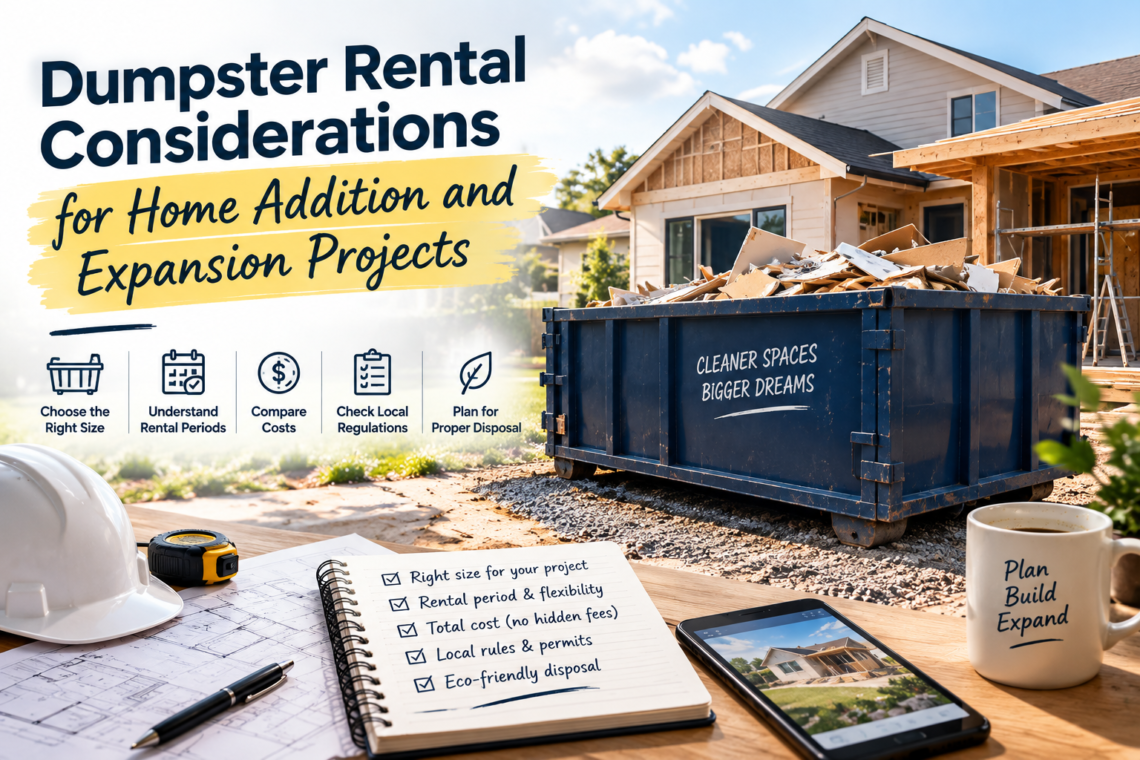
Home addition and expansion projects create a different kind of debris challenge than a basic room remodel. Contractors may be opening exterior walls, removing siding, cutting into roofing, excavating near the home, replacing windows or doors, framing new space, installing utilities, and tying new construction into an existing structure. Each phase can produce waste in a different location, and the jobsite can get crowded quickly.
A dumpster rental plan should be part of the project setup from the beginning. When debris has a clear place to go, crews can keep access routes open, protect new materials, and avoid letting old building materials interfere with the next phase of work. For additions, waste removal is not just cleanup. It helps the whole project move in the right order.
Start With the Addition Scope
Before scheduling a dumpster, contractors should review the full addition or expansion scope. A bedroom addition, garage expansion, sunroom, second-story addition, kitchen bump-out, or new primary suite will each create different debris. Some projects involve mostly framing scraps and packaging, while others require major demolition where the new space connects to the existing home.
The review should include demolition, excavation, framing, roofing, siding, insulation, drywall, flooring, trim, fixture installation, and exterior restoration. Contractors should also note whether concrete, masonry, soil, roofing, or old decking will be removed. These materials can change both dumpster size and loading strategy.
A full scope review helps prevent the disposal plan from being based only on the first phase of work.
Plan Around the Construction Sequence
Home additions move through several stages. Site prep and excavation may create soil, brush, old hardscape, or foundation-related debris. Tie-in demolition may add drywall, siding, sheathing, roofing, insulation, trim, and framing material. Later stages create lumber cutoffs, packaging, drywall scraps, flooring waste, and finish materials.
Contractors should match dumpster timing to these phases. If the container arrives too late, demolition debris can pile up before framing begins. If it is filled during early work and not serviced before roofing or drywall, the next phase may slow down.
A phased disposal plan keeps the site ready for each new step instead of forcing crews to work around yesterday’s debris.
Choose Placement Carefully
Dumpster placement is especially important on additions because the property still needs room for construction activity. The container should be close enough for efficient loading but not placed where it blocks excavation, framing access, material deliveries, homeowner parking, or equipment movement.
Working with Temporary Dumpster can help contractors coordinate dumpster rental placement and service timing around home addition schedules. The best location usually supports several phases of work while keeping the driveway, street access, and service route as open as possible.
On tight properties, contractors may need a smaller container with planned swaps rather than one larger dumpster that blocks too much of the site.
Protect Access to the Existing Home
Many home additions happen while the homeowner still lives in the house. Contractors should keep safe access to entrances, garages, walkways, and essential living areas whenever possible. If the dumpster blocks the wrong route, it can create daily frustration for the homeowner and the crew.
Before placement, identify which doors, paths, and parking areas need to remain usable. If temporary access changes are necessary, the homeowner should know the schedule. Debris routes should also avoid bringing sharp or dusty materials through occupied areas unless proper protection is in place.
A good waste plan respects the fact that the property may still be functioning as a home.
Coordinate With Material Deliveries
Additions require frequent deliveries. Lumber, trusses, sheathing, windows, doors, roofing, siding, insulation, drywall, flooring, cabinets, fixtures, and trim may all arrive at different points. If the dumpster occupies the best staging area, crews may have to move materials twice or delay unloading.
Contractors should compare the dumpster location with the delivery schedule before work begins. The container should not block boom trucks, flatbeds, drywall deliveries, or appliance access. New materials should be staged away from debris, nails, dust, and wet waste.
Planning waste removal and deliveries together keeps the jobsite from becoming a traffic jam.
Watch for Heavy Materials
Some addition projects include heavier debris than expected. Concrete cuts, brick veneer, block, stone, old patios, foundation material, roofing, plaster, tile, and soil can add weight quickly. A dumpster may still have visible space but already be carrying a heavy load.
Contractors should identify heavy debris during planning and decide whether it needs separate handling. Dense materials should be loaded carefully and monitored as the container fills. If the project combines heavy demolition with ordinary construction debris, staged pickups may help prevent the dumpster from becoming unusable too early.
Weight planning is one of the simplest ways to avoid disposal delays.
Keep Demolition Debris Separate From New Construction Waste
Home additions often involve both tear-out and new construction. Old drywall, siding, roofing, insulation, trim, and damaged framing may come out before new materials go in. Later, the project produces clean lumber cutoffs, packaging, drywall scraps, siding pieces, and finish waste.
Keeping these materials reasonably separated can make cleanup easier. Reusable items should be staged away from demolition debris. Questionable materials should be set aside until disposal rules are confirmed. Packaging should be broken down so it does not take over the work area.
A simple sorting system helps crews maintain order as the project shifts from demolition to building.
Create Clear Debris Routes
Debris routes should be planned before tear-out begins. On addition projects, debris may move from the inside of the house, the exterior wall, the roofline, the foundation area, or the backyard. These paths need to stay clear as crews move tools, materials, and equipment.
Contractors should avoid letting debris piles form in doorways, side yards, garages, or around scaffolding. If debris must pass through finished or occupied areas, protect floors, walls, and corners. Exterior routes should account for mud, slopes, landscaping, and narrow gates.
A clear route saves time every time material leaves the work zone.
Plan for Roof and Wall Tie-In Debris
The point where the addition connects to the existing home often creates concentrated debris. Crews may remove siding, sheathing, housewrap, insulation, drywall, trim, roofing, flashing, gutters, soffit, fascia, or framing materials. This work may also uncover hidden damage that adds to the debris load.
Contractors should leave capacity for tie-in waste and repair-related materials. If the dumpster is already nearly full before this phase, the crew may have to stage debris in the way of framing or weatherproofing work.
Planning for the connection point helps avoid delays during one of the most important parts of the build.
Maintain Service Truck Access
A dumpster only helps if it can be serviced when needed. Addition projects often have crowded driveways and streets because of crew vehicles, material deliveries, trailers, lifts, and equipment. If service access is blocked, a full container may remain on-site longer than planned.
Contractors should keep a clear approach to the dumpster throughout the job. Crews should not stack lumber, siding, drywall, pallets, tools, or debris in front of the container. If a swap is likely, the site should be ready before the truck arrives.
Protecting service access keeps the cleanup plan moving.
Reset the Site at Key Milestones
A home addition can last weeks or months, so cleanup should not wait until the end. Contractors should schedule resets after major demolition, after framing, before inspections, before drywall delivery, before finish work, and before exterior restoration.
Each reset should remove loose debris, clear paths, organize materials, and confirm that the dumpster still has capacity. These cleanup points help crews work more efficiently and make the project look more professional to the homeowner.
Regular resets also make it easier to spot hazards or incomplete work.
Avoid Common Dumpster Planning Mistakes
One common mistake is placing the dumpster for the first demolition phase without considering framing, deliveries, and service access later. Another is underestimating how much waste tie-in work can create. Contractors should also avoid mixing heavy debris into the load without monitoring weight.
Waiting too long to schedule a pickup can also slow the project. Once a dumpster is full, debris starts piling up somewhere else. The better approach is to track capacity and arrange service before cleanup becomes urgent.
A strong plan keeps waste removal from interrupting construction.
Dumpster rental planning for home addition and expansion projects requires careful attention to scope, sequencing, placement, access, weight, and service timing. Contractors need to manage demolition debris, framing scraps, roofing materials, siding waste, packaging, and finish debris while protecting space for new materials and active work.
By reviewing the project early, choosing smart placement, coordinating deliveries, keeping debris routes clear, planning for tie-in waste, and resetting the site at key milestones, contractors can keep addition projects cleaner and more efficient. A well-planned dumpster setup supports the work from the first opening in the existing home through the final cleanup.
You may also Like: Uploadwords Com Tech: The Free Word Count and Keyword Tool Explained



One comment on “Dumpster Rental Considerations for Home Addition and Expansion Projects”