
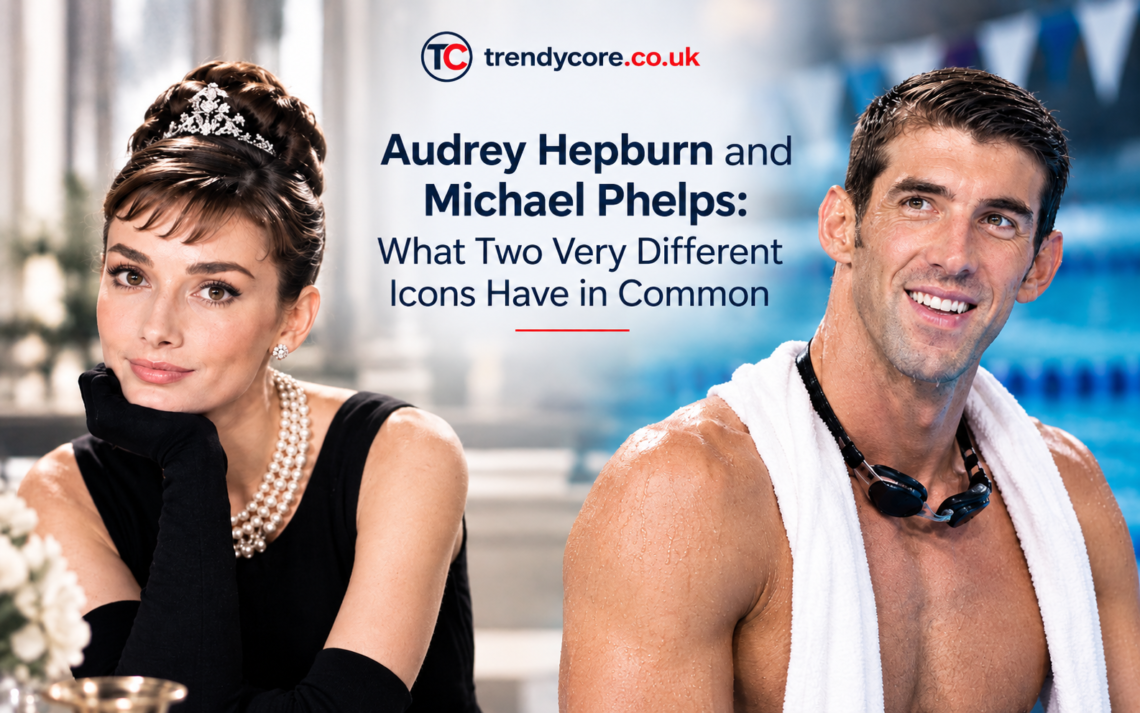
Audrey Hepburn and Michael Phelps never crossed paths. One built her legacy on movie screens in the 1950s and 60s. The other built his in swimming pools decades later, well after Hepburn had passed away. Yet their names increasingly appear together in searches, and once you look past the surface, a genuinely interesting comparison emerges.
This article looks at both careers honestly, sticking to documented facts rather than manufacturing a connection that never existed.
Who Was Audrey Hepburn?
Audrey Hepburn, born in 1929, became one of the defining actresses of classic Hollywood cinema. Her breakout role in Roman Holiday launched her stardom in 1953, and she went on to star in Sabrina, Breakfast at Tiffany’s, and several other films that still define mid-century film style today. The American Film Institute later ranked her as the third greatest screen legend in American cinema history, a testament to how thoroughly she shaped the era.
Beyond acting, Hepburn spent her later years working extensively with UNICEF, traveling to some of the world’s most difficult humanitarian crises to advocate for children. She also lived with real personal struggles, including depression and disordered eating, challenges she rarely discussed publicly but that biographers have since documented.
Who Is Michael Phelps?
Michael Phelps, born in 1985, became the most decorated Olympian in history. Across five Olympic Games, he collected 28 medals, including 23 gold, a record that remains unmatched in any sport. His dominance in the pool spanned more than a decade, from his first Games in 2000 through his final competition in 2016.
Away from swimming, Phelps has spoken openly about living with ADHD and later about severe depression and suicidal thoughts following his competitive peak. That openness helped shift public conversation around mental health in elite athletes, an impact that now sits alongside his medal count as part of his broader legacy.
Comparing Their Legacies
| Category | Audrey Hepburn | Michael Phelps |
|---|---|---|
| Field | Film and fashion | Competitive swimming |
| Era of peak fame | 1950s–1960s | 2000s–2010s |
| Signature achievement | Roman Holiday, Breakfast at Tiffany’s | 28 Olympic medals, 23 gold |
| Recognition | AFI’s third greatest screen legend | Most decorated Olympian ever |
| Humanitarian/public work | UNICEF Goodwill Ambassador | Mental health advocacy |
| Personal struggles | Depression, disordered eating | ADHD, depression |
Why These Two Names Keep Appearing Together
Neither Hepburn nor Phelps ever worked together, met publicly, or referenced each other in any documented way. Their pairing in search results and articles mostly reflects a broader content trend: comparing two widely recognized names from different fields to explore what “iconic status” actually looks like across generations and industries.
That trend produces a genuinely useful angle, even without a direct connection. Both figures reached the absolute peak of their respective fields. Both also became known for something beyond their core achievement, humanitarian work in Hepburn’s case, mental health openness in Phelps’ case. That pattern says something real about how lasting legacies get built, even when the two people involved never shared a stage, a decade, or a profession.
What Their Stories Actually Teach
Looking at both careers side by side highlights a shared lesson: extraordinary skill alone doesn’t define a lasting legacy. Hepburn is remembered as much for her humanitarian work as for her films. Phelps is remembered as much for his honesty about mental health as for his medal count. In both cases, vulnerability and purpose beyond their profession shaped how history ultimately viewed them.
Their personal struggles also add important context. Hepburn’s private battles with depression and disordered eating went largely undiscussed during her lifetime, reflecting a different era’s approach to mental health. Phelps, by contrast, has spoken directly and repeatedly about his own struggles, reflecting how public conversation around mental health has shifted dramatically in the decades between their careers.
Final Thoughts
Audrey Hepburn and Michael Phelps belong to entirely different eras, industries, and personal stories. There’s no documented connection, collaboration, or relationship between them. What connects their names in search results is a broader curiosity about how icons are made, and both offer a genuinely compelling case study: extraordinary achievement in their field, paired with a legacy shaped just as much by what they did beyond it.
Whether your interest started with cinema, swimming, or simple curiosity about the pairing, both careers reward a closer look on their own terms.
You may also Like: Pasonet: The Real Company Versus the Fabricated Online Concept





One comment on “Audrey Hepburn and Michael Phelps: What Two Very Different Icons Have in Common”