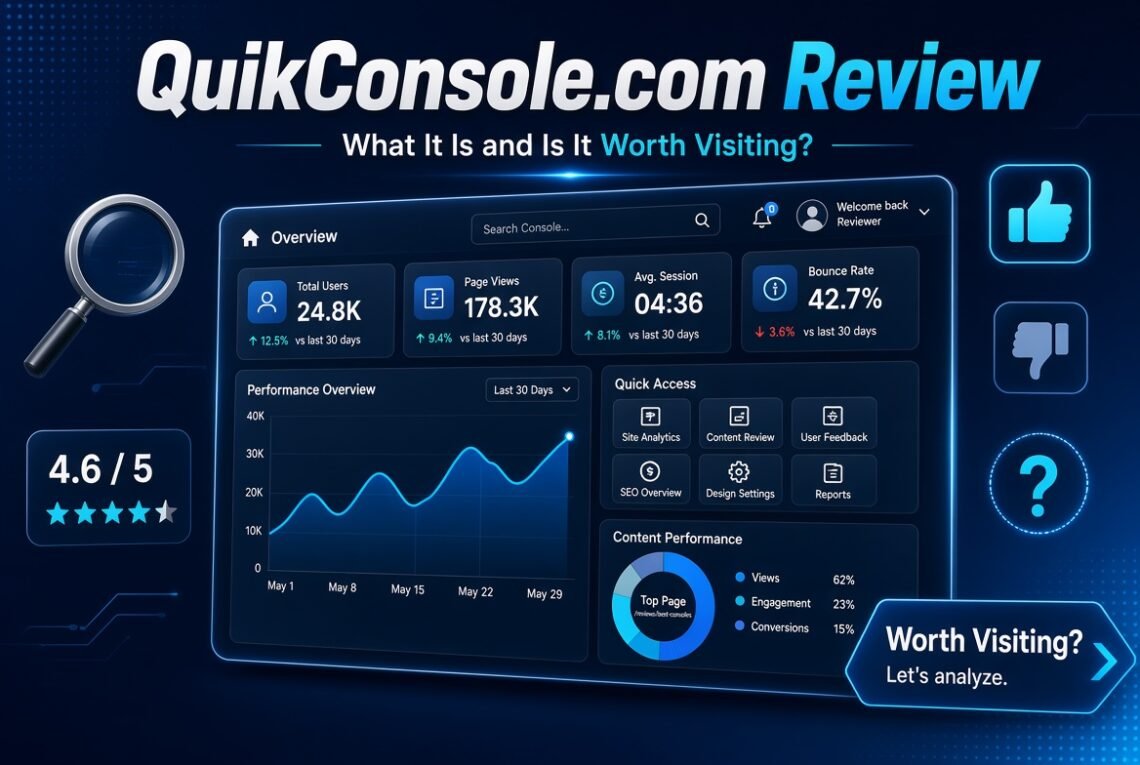
Type a tech question into Google often enough, and eventually one name starts showing up more than once: quikconsole com. It’s not a household brand yet, but it’s carved out a spot in search results for topics ranging from gaming and coding to cloud storage and cybersecurity. So what exactly is it, and should it earn a spot in your bookmarks?
This guide walks through what the site actually publishes, who it’s built for, and how it stacks up against the flood of other digital knowledge hubs competing for the same readers. No recycled talking points just a clear-eyed look at what you’ll find when you click through.
What Is Quikconsole Com?
At its core, quikconsole com positions itself as an online knowledge platform. Rather than locking into one narrow niche, it spreads coverage across several digital-first subjects: gaming, coding, cloud storage, cybersecurity, business, and general tech trends.
The pitch is straightforward. Complex digital topics get simplified into guides and explainers that don’t require a computer science degree to follow. That’s a deliberate choice, and it shapes almost everything about how the site reads.
Typical coverage areas include:
- Gaming news, console updates, and gameplay tips
- Beginner-friendly coding guides and programming concepts
- Cloud storage explanations and data-safety basics
- Cybersecurity awareness for everyday users
- Business and productivity-adjacent tech topics
- General digital trends and emerging tools
That breadth is the site’s calling card. Instead of asking readers to bounce between five specialist blogs, it tries to answer several different curiosities under one roof.
Why Quikconsole Com Keeps Showing Up in Search Results
Search visibility for a site like this usually comes down to consistent publishing and topics that match what people are actually typing into Google. Gaming, coding, and cybersecurity are all evergreen search categories people ask beginner-level questions about them every single day, and that steady demand rewards sites that answer clearly and quickly.
There’s also a trust-building angle. New visitors often search the site’s own name before reading anything else, just to confirm it’s a legitimate resource and not a low-effort content mill. That kind of “is this site trustworthy” search is common across the internet, and it’s a healthy habit verifying a source before relying on it protects you from wasted time or bad advice.
Content Style and Readability
The writing style on the platform leans plain and conversational. Sentences stay short. Jargon gets explained rather than assumed. For someone brand new to a topic say, cloud storage or basic cybersecurity hygiene that’s a genuinely useful approach.
Most articles run at a moderate length, long enough to actually explain a concept but short enough that you’re not committing twenty minutes to a single post. That balance matters for a knowledge hub. Too short, and readers leave with more questions than answers. Too long, and casual visitors bounce before finishing.
Here’s a rough breakdown of how depth varies across the site’s main categories:
| Category | Typical Depth | Best For |
|---|---|---|
| Gaming | Light news and tips | Casual gamers, quick updates |
| Coding | Beginner concepts | First-time learners |
| Cloud Storage | Practical explainers | Everyday users, not IT admins |
| Cybersecurity | Awareness-level guidance | General safety habits |
| Business Tech | Overview-style content | Small teams, solopreneurs |
The pattern is consistent across categories: accessible, digestible, and aimed at people early in their learning curve rather than seasoned professionals looking for advanced technical detail.
How the Site Is Organized
Browsing the site feels familiar if you’ve spent time on any modern content hub. A navigation menu sorts posts into categories, the homepage highlights recent or trending articles, and individual posts include a headline, a short excerpt, and usually a publish date.
Category pages make it easy to jump straight into gaming content or coding tutorials without wading through unrelated posts. That kind of organization sounds basic, but it matters more than people give it credit for a cluttered or confusing layout drives readers away before they even reach the content itself.
Search functionality, when available, helps returning visitors find specific guides quickly rather than scrolling through an endless archive. Combined with clear categories, this keeps the browsing experience low-friction.
Behind the Scenes: Publishing Approach
A closer look at how the site operates explains a lot about the reading experience. Content appears to follow a steady release schedule, with new guides and explainers rolling out across categories rather than all being concentrated in one niche at a time. That pacing keeps the homepage feeling active instead of stagnant.
Most posts follow a similar template: a clear headline stating the topic, a short introduction framing why it matters, and a body that breaks the subject into digestible sections. That consistency helps returning readers know what to expect, even when they’re jumping between wildly different subjects like gaming and cybersecurity in the same sitting.
There’s also a noticeable emphasis on answering specific questions rather than writing broad, meandering overviews. Article titles tend to mirror the kinds of questions people actually type into a search bar a practical approach that keeps the content useful rather than generic.
The Free-Access Model
Nothing on the platform sits behind a paywall, which raises the same question any ad-supported knowledge hub faces: how does free content stay sustainable? The typical answer is advertising and organic search traffic. Publishing consistently across popular search categories gaming, coding basics, cloud storage, cybersecurity brings in steady visitor numbers, and that traffic supports the operation without charging readers directly.
This model shapes what gets covered. Search-driven platforms tend to prioritize topics with reliable ongoing demand over niche subjects that only a small audience would ever look up. That’s worth keeping in mind: coverage breadth reflects what people are actively searching for, not necessarily what’s most technically important.
Is Quikconsole Com Reliable?
This is usually the real question behind the search. The honest answer: it depends on what you’re using it for.
For learning the basics understanding what cloud storage actually does, picking up beginner coding vocabulary, or getting a general sense of cybersecurity best practices the site does a solid job. It simplifies without dumbing things down too far, and the plain-language approach genuinely helps newcomers.
Where caution matters more is with advanced or high-stakes technical decisions. If you’re architecting enterprise-level cloud infrastructure or making serious cybersecurity policy decisions for a business, a general knowledge hub covering six or seven different subjects isn’t a substitute for specialist documentation or a qualified professional. That’s not a knock specific to this site it’s true of nearly every broad-topic content platform. Use it to build a foundation, then verify anything mission-critical with a dedicated expert source.
Pros and Cons
Weighing the strengths against the limitations gives a clearer picture of where the site fits.
Pros:
- Beginner-friendly explanations across several tech-adjacent topics
- Consistent publishing schedule keeps content current
- Clear category organization makes browsing easy
- No paywall blocking access to guides
- Plain language that avoids unnecessary jargon
Cons:
- Limited depth for advanced or enterprise-level topics
- Coverage spans many subjects, so specialization suffers
- Author credentials and sourcing aren’t always front and center
- Not a substitute for professional technical or security consulting
Taken together, this positions the platform as a solid entry point rather than an authoritative reference for advanced work.
Who Should Actually Use Quikconsole Com?
Not every resource fits every reader, and this one has a fairly clear audience.
Beginners exploring tech topics for the first time will likely get the most value. Whether it’s a first coding tutorial or a plain-language explanation of how cloud storage works, the content is built for people who don’t already have background knowledge.
Casual gamers looking for quick console news or gameplay tips will find digestible, low-commitment content rather than deep competitive analysis.
Small business owners and solopreneurs curious about digital tools and general tech trends can use the site as a starting point before diving into more specialized resources.
On the other hand, IT professionals, security specialists, and experienced developers will likely find the content too introductory. That’s fine it’s simply not the audience the site is built for.
Common Questions Readers Ask
Is it free to access? Yes, articles are available without a subscription or login requirement.
How often does new content get published? The site maintains a fairly regular publishing rhythm, keeping category pages from going stale.
Is it good for advanced developers? Not really. Content skews toward beginners and intermediate learners rather than advanced technical audiences.
Can I trust cybersecurity advice from the site? Use it for general awareness and good habits, but confirm anything specific to your business or sensitive data with a qualified security professional.
Does it cover topics outside of tech? Some general business and productivity content appears alongside the core tech categories, though tech remains the primary focus.
How It Compares to Other Knowledge Hubs
Multi-topic digital platforms are everywhere, and separating a decent one from a forgettable one usually comes down to a few factors: consistency, clarity, and whether the writing actually respects the reader’s time.
Things worth checking on any similar site include:
- Publishing frequency: does content stay fresh, or does the archive feel abandoned?
- Explanation quality: are concepts actually simplified, or just repackaged jargon?
- Navigation: can you find what you’re looking for in a few clicks?
- Tone consistency: does the writing feel steady across categories, or does quality swing wildly?
On these measures, quikconsole com holds up reasonably well for a beginner-focused resource, particularly around organization and explanation clarity.
Tips for Getting the Most Value
A few habits help readers get more out of any beginner-focused knowledge hub, this one included:
- Use articles as a starting point, not a final authority, especially for security or business-critical decisions.
- Cross-check advanced technical guidance against official documentation or a qualified professional.
- Bookmark the categories that match your interests instead of browsing everything at once.
- Treat beginner guides as a foundation, then move to specialist resources once you outgrow the basics.
Approached this way, the platform becomes a helpful filter for figuring out what deserves deeper research, rather than a final word on complex decisions.
Final Verdict
Quikconsole com fills a specific role: a beginner-friendly knowledge hub covering gaming, coding, cloud storage, cybersecurity, and general tech topics in plain language. It’s not trying to be a specialist technical journal, and it doesn’t need to be.
For newcomers building foundational knowledge, casual gamers wanting quick updates, or small business owners curious about digital trends, it’s a genuinely useful stop. For advanced technical work or high-stakes decisions, treat it as a starting point and lean on specialist sources for the details that really matter.
If you’re on the fence, the simplest approach is to browse a category or two yourself. See whether the explanations click for your level of experience, and decide from there whether it deserves a regular spot in your reading habits.
Beginner-focused knowledge hubs aren’t going away anytime soon. As more people teach themselves tech skills outside of formal classrooms, demand for plain-language explainers keeps growing. The platforms that stick around long-term are the ones that stay consistent steady publishing, clear organization, and content that respects where the reader is starting from rather than assuming prior expertise. Measured against that bar, this is a reasonably solid stop for anyone building foundational tech knowledge, as long as you remember its limits and turn to specialist sources whenever the stakes get higher.
You may also Like: PressVibePulse com Review





One comment on “QuikConsole com Review: What It Is and Is It Worth Visiting?”